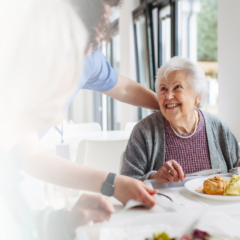
Care services, living spaces, activities… but what about dining in senior living? When searching for or transitioning to a senior living community, one of the biggest questions families have is about the dining experience. They want to know that their loved one will eat well, enjoy nutritious meals, and genuinely look forward to sitting down at the table each day.
When it comes to seniors, meals and the overall dining experience influence far more than just nutrition. Dining is more than just the food on the plate – it fosters social connections, creates daily routine, and enhances quality of life, giving residents something to look forward to each and every day.
Dining Is About More Than Just Food
Dining is about more than food and eating in a senior living community. It becomes a meaningful part of daily life, supporting seniors’ overall physical, emotional, and social well-being the moment they head to the dining room. The following benefits show why families should pay close attention to a community’s dining services.
Nutritious Meals Support Better Health
We have to start with the obvious: What’s the food like in a senior living community? Does it consistently promote health and nutrition for your loved one?
As metabolism and dietary needs change with age, what seniors eat becomes increasingly important as they grow older. Senior living communities provide residents with balanced chef-prepared meals tailored to meet nutritional needs. From fruits and vegetables to whole grains and lean proteins, residents enjoy healthy meals that support energy, cognitive function, and overall wellbeing.
Focusing on quality, variety, and nutrition can help lower the risk of chronic conditions, such as heart disease and diabetes. Not only do residents enjoy delicious and comforting meals, but they’re also nourishing their bodies for a happy and healthy future.
Communities also accommodate residents with unique dietary restrictions, such as low-sodium, diabetic, puréed, and other recommended diets.
Dining Brings People Together
The dining room isn’t just about the food; it’s a shared experience that brings residents together. Whether it’s breakfast, lunch, dinner, or even a midday snack, residents gather around the table to enjoy a meal and one another’s company. These conversations and shared laughs often grow into genuine friendships, creating a true sense of community.
For older adults, loneliness and social isolation can lead to an increased risk of different health conditions, such as dementia, heart disease, stroke, and even premature death. Dining with peers can provide regular opportunities for social interaction and connection, helping to build and strengthen relationships naturally. Beyond the dining room, senior living communities also offer a full calendar of optional activities based on residents’ interests that encourage social interaction with peers.
The community dining experience can be the first step in creating long lasting friendships built on a foundation of shared meals and mutual understanding.
Dining Establishes Routine
Daily mealtimes and trips to the dining room are great ways to establish routine. From the moment a resident gets up, gets dressed, and leaves their living space to head to the dining room, they’re creating a familiar rhythm for the day. Looking forward to the next meal encourages residents to get out, stay active, and add purpose to their day. Along the way, they interact with staff and residents while enjoying a restaurant-style, home-cooked meal. This consistency provides familiar structure and something to look forward to every day.
Encourages Independence and Choice
Meals are never the same in a senior living community. Residents are offered a variety of menu options each day, often including rotating specials. Just as they would at a restaurant, they get to choose what to eat. This encourages decision making and maintaining a sense of independence. Many communities offer flexible dining times, allowing residents to enjoy meals when it’s most convenient.
While residents don’t have to worry about grocery shopping, cooking, or cleaning, they still have the freedom to make personal choices that fit their preferences and lifestyle.
For many seniors, losing independence is one of the biggest concerns when transitioning to senior living. Having the ability to make everyday decisions, even if it is choosing a meal, can help foster a sense of purpose, confidence, and control.
Improves Overall Quality of Life
The entire dining experience can enrich seniors’ lives in countless ways, supporting their physical, emotional, and social well-being. Enjoying nutritious meals can contribute to better overall health, while gathering around the table with friends fosters genuine connection and conversation.
Beyond health benefits, dining brings comfort and enjoyment to everyday life. Sharing meals with friends, building relationships with dining staff, and looking forward to comforting dishes can make each day more fulfilling. Without the stress of planning meals or cooking, residents have more room in their day to focus on hobbies, activities, and the people around them.
Eating and Living Well in Senior Living
When families begin exploring personal care or another form of senior living, the dining experience should matter just as much as care services, activities, and living spaces. The experience provides more than just nutritious meals; it encourages connection and independence, establishes routine, and enhances wellbeing. It’s something residents enjoy every single day, making it an important factor in feeling comfortable, engaged, and truly at home.
From the quality of meals to the atmosphere and opportunities for connection, the dining experience can make all the difference. At DevonHouse, one of our favorite summer traditions is Picnics on the Patio, where our residents enjoy their favorite meals on the patio surrounded by friends and the warm weather. To learn more about our chef-prepared meals, restaurant-style dining, and the welcoming experience residents enjoy daily, explore our dining page.